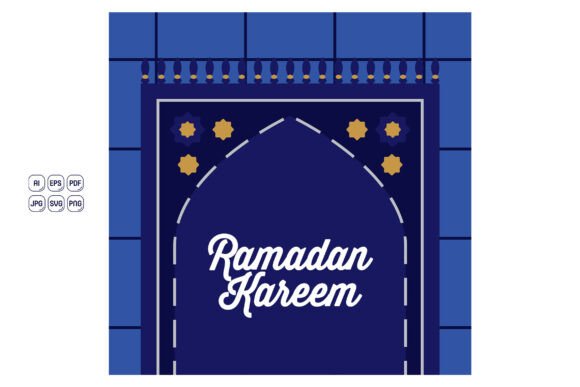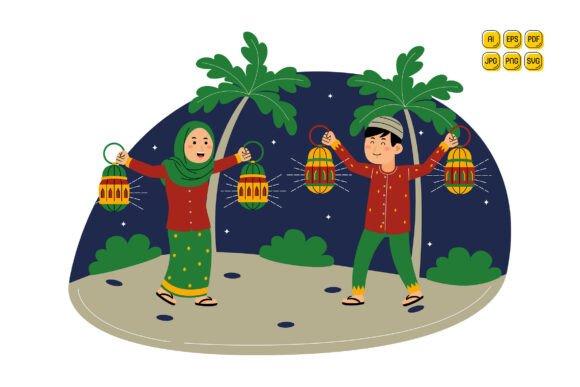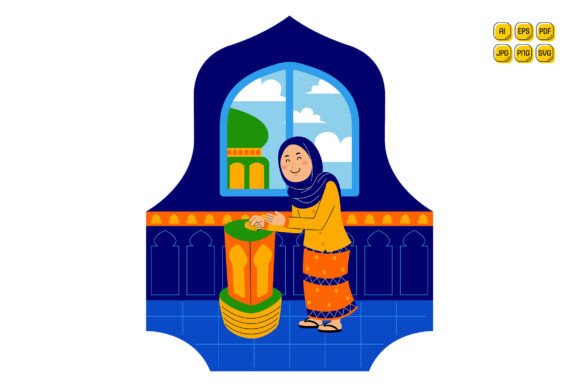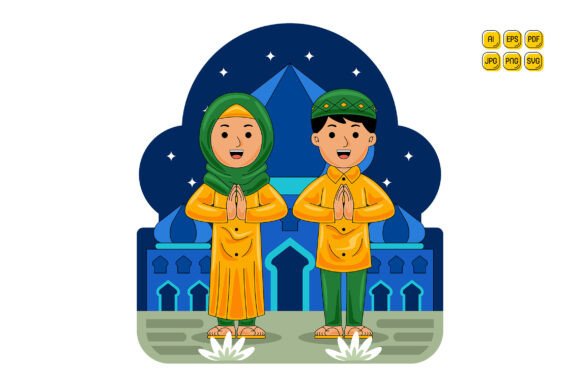
Muslim Man Woman Greeting: A Thoughtful Visual Resource for Culturally Aware Design
Visual communication carries meaning beyond aesthetics — especially when representing cultural and religious practices. The Muslim Man Woman Greeting refers to a respectful, modest, and context-aware depiction of interpersonal interaction between Muslim men and women, grounded in Islamic principles of haya (modesty), respect, and intention. Unlike generic handshake or greeting illustrations, this visual theme intentionally avoids physical contact where culturally or religiously inappropriate, instead emphasizing gestures like a slight bow, hand-over-heart, or respectful nod — all rendered with dignity and clarity. These illustrations are not symbolic abstractions; they reflect real-world norms observed across diverse Muslim communities worldwide.
Why This Greeting Style Stands Apart Visually and Functionally
Many stock illustration libraries offer generic “diverse greeting” assets — often featuring handshakes, hugs, or high-fives — which may unintentionally misrepresent or overlook religious boundaries. In contrast, the Muslim Man Woman Greeting set is built around intentionality: no physical contact, balanced spatial distance, gender-appropriate attire (e.g., hijab, modest clothing), and neutral, inclusive body language. Its flat design style supports clarity at any scale, while the vector format ensures fidelity whether used on a 24-inch conference banner or a 32-pixel social media icon.
This isn’t just about compliance — it’s about resonance. A mosque’s website using these illustrations communicates understanding to its community. A healthcare provider’s patient education material gains trust through accurate representation. An HR training module on intercultural workplace etiquette becomes more credible when visuals align with lived practice — not assumptions.
How It Compares to Other Visual Approaches
Illustrations rooted in broad diversity packs often prioritize demographic variety over contextual nuance. You’ll find representations of age, ethnicity, and ability — but rarely attention to faith-based interaction norms. Photographic alternatives face similar limitations: real-life images risk unintended cultural specificity (e.g., regional dress codes or facial expressions that don’t translate universally), and licensing restricts editing freedom.
Raster-based graphics (like standard JPG or PNG files) lack scalability without quality loss — problematic for print banners or responsive web layouts. Meanwhile, AI or EPS vector files from this Muslim Man Woman Greeting collection preserve crisp edges at any size, and SVG support enables seamless integration into modern web frameworks without loading heavy image files.
Unlike AI-generated illustrations — which can produce inconsistent styling, inaccurate proportions, or unintended symbolism — this curated set offers cohesive visual language across all 100 variations. Each asset shares consistent line weight, color harmony, and compositional balance, making it practical to mix and match elements across campaigns without visual dissonance.
Practical Strengths Across Real-World Use Cases
The flexibility of the Muslim Man Woman Greeting assets stems from both technical and conceptual design choices:
- Multi-format delivery: Includes AI, EPS, SVG, PDF, JPG, and PNG — supporting designers working in Illustrator, Figma, Canva, web development, or print production.
- Full editability: Every shape, stroke, and fill is layered and labeled — allowing users to adjust skin tones, garment colors, background hues, or even swap accessories (e.g., adding a prayer mat or removing headwear) without breaking integrity.
- Resolution-ready: All files originate from a 5000 × 5000 pixel base, ensuring sharp output even on large-format signage or retina displays.
- Modular composition: Elements like hands, torsos, halos (for emphasis), speech bubbles, and decorative borders can be extracted and recombined — enabling custom infographics, animated social posts, or bilingual landing page sections.
A nonprofit launching a Ramadan wellness campaign might use one illustration as a hero banner, recolor it to match their brand palette, then extract the silhouette pair to build an animated Instagram story sequence. A university’s Office of Religious Life could combine greeting figures with campus landmarks in an SVG map graphic — all editable in-browser without proprietary software.
Tradeoffs and Considerations Before Choosing
No single visual resource fits every need — and awareness of limitations supports better decisions. The Muslim Man Woman Greeting collection excels in consistency and adaptability but assumes a baseline familiarity with vector workflows. Users relying exclusively on drag-and-drop tools (e.g., basic Canva plans) may need to convert SVGs to PNGs first — losing some editability, though transparency and resolution remain intact.
It also reflects mainstream, widely accepted interpretations of modest greeting — not niche or region-specific customs (e.g., specific South Asian or West African gestures). For highly localized outreach, pairing these base illustrations with authentic photography or community-sourced input remains advisable.
Color customization is straightforward, but the set doesn’t include pre-built dark-mode variants or accessibility-optimized contrast presets. Designers should verify contrast ratios when applying new fills — especially for text overlays or data visualization contexts.
When This Resource Fits — and When It Might Not
This collection serves best when you need scalable, respectful, editable visuals that honor Islamic norms without sacrificing design flexibility. It’s particularly valuable for:
- Educational platforms building inclusive curricula on world religions;
- Healthcare, legal, or government agencies developing multilingual public-facing materials;
- Brands launching products or services targeting Muslim-majority markets (e.g., halal food delivery, modest fashion, fintech);
- Design teams maintaining brand systems requiring modular, on-brand iconography.
It’s less ideal if your priority is photorealism, hyper-regional specificity, or turnkey animation — those require different tooling or custom illustration work. Likewise, projects needing extensive character customization (e.g., detailed facial expressions, dynamic poses, or narrative scene-building) may benefit from commissioning bespoke artwork rather than adapting flat vectors.
Making the Choice With Intention
Selecting visual resources involves balancing authenticity, usability, and scalability. The Muslim Man Woman Greeting collection meets a distinct need: offering technically robust, culturally grounded assets that empower designers — not constrain them. Its value lies not in being “the only option,” but in filling a gap many creators encounter when trying to represent faith-aware interaction with both accuracy and aesthetic cohesion.
Before choosing, ask: Does this support how my audience understands respect? Will it integrate smoothly into my existing workflow? Can I adapt it without compromising meaning? If the answer leans toward yes — especially across multiple formats and applications — then this resource offers tangible, long-term utility. And because each file is fully editable and reusable across projects, the investment extends far beyond a single campaign or platform.